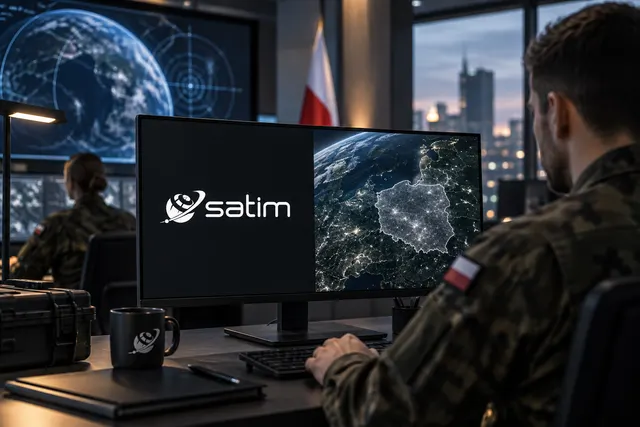
Image: AI-generated editorial illustration
SATIM said it entered a contract with Poland’s Ministry of National Defence to supply software for automated analysis of satellite synthetic-aperture-radar imagery. The software is meant to support the MikroSAR Earth-observation program and help analysts extract intelligence from Poland’s sovereign SAR constellation.
SATIM said on November 12 that it entered a contract with Poland’s Ministry of National Defence to provide software for automated analysis of satellite synthetic-aperture-radar, or SAR, imagery. The company said the system will support Poland’s MikroSAR Earth-observation program and help analysts turn radar data from a sovereign SAR constellation into operational intelligence.
The contract would make Poland’s defense establishment a reference customer for SATIM’s SAR-analysis software, according to SATIM and MilMag. In its post on X, the company said the software automatically detects and classifies vessels, vehicles and aircraft in radar imagery and is intended to enable ongoing monitoring across dozens of areas while improving situational awareness. SATIM did not disclose financial terms, but MilMag reported that SATIM’s offer was selected on October 21 and the contract was signed on October 28.
What exactly did SATIM say it sold?
SATIM said it is providing software for automated SAR-imagery analysis, with a focus on detecting and classifying vessels, vehicles and aircraft. In practical terms, that means the system is designed to process radar imagery and surface structured outputs that can be used for monitoring and reporting rather than requiring humans to inspect raw images manually.
MilMag reported that the procurement includes a server software instance with 30 client interfaces under a perpetual license, technical support and a radar-data simulator. The package also includes a separate stand-alone simulator under a perpetual license for generating SAR signatures of military equipment. MilMag said the contract covers automatic detection and classification of objects plus the generation of alerts and reports.
SATIM said the software is intended to support ongoing monitoring and detailed situational awareness. In its own description, the company said the system will help analysts extract information from Poland’s sovereign SAR constellation for the MikroSAR program.
Why is MikroSAR important here?
MikroSAR is the defense and earth-observation program tied to Poland’s sovereign SAR capability. MilMag reported that the Geospatial Intelligence and Satellite Services Agency operates four of the six planned POLSARIS radar-reconnaissance satellites, and that the MikroSAR system was delivered by ICEYE Polska leading a consortium that also included Wojskowe Zakłady Łączności Nr 1 of PGZ. MilMag also reported that the final two POLSARIS satellites are expected to reach orbit in 2027.
MilMag reported that SAR works day or night and in any weather, which can be useful when optical imagery is limited, but that the resulting images are hard for humans to interpret quickly. That is the context SATIM is targeting with automated analysis software for monitoring and situational awareness.
SATIM’s public description aligns with that use case. The company said its system can automatically detect and classify objects in radar imagery, support monitoring in dozens of areas and build situational awareness. MilMag separately described OREC as SATIM’s flagship AI software for automatically detecting and classifying objects in SAR imagery.
How much did Poland pay, and what happened in the tender?
MilMag reported that SATIM Monitoring Satelitarny was the only bidder and priced its offer at PLN 12,255,000 net, or PLN 15,073,650 gross. The outlet said Poland’s 2nd Regional Logistics Base published the tender results for SAR-imagery analysis software, technical support and a radar-data simulator on November 3, 2026.
MilMag also reported that the procurement procedure had been conducted under an open procedure since September 25, 2026, with requests to participate due by 8:45 a.m. on October 12. The bid evaluation criteria weighted price at 60%, class coverage at 9%, precision at 9%, recall at 9%, F1 at 9% and on-site service visits at 4%.
Beyond the core contract, MilMag described SATIM’s OREC platform as sensor-agnostic and able to work with commercial and military SAR sources including ICEYE, Capella, Umbra and Synspective. The outlet said OREC processes raw SAR data from satellites, UAVs or aircraft into structured intelligence, typically in minutes, and that its capabilities include detection and classification across more than 300 object classes.
What does SATIM’s product stack show?
MilMag reported that OREC uses specialized convolutional neural networks for vessels, aircraft and vehicles, plus a proprietary SAR signature simulator called SSIG. It also said OREC outputs standardized reports suitable for integration into C2/C4ISR systems and supports sovereign or air-gapped deployments.
MilMag further reported that OREC Intelligence is a related product for automated monitoring of areas of interest with alerts, while OREC Evolve lets users train and adapt models on their own infrastructure, including classified data, without sending that data to SATIM. Those product characteristics show how SATIM is packaging its software for defense and intelligence users that need local control over sensitive imagery.
SATIM’s contract announcement gives it a concrete reference customer inside a national defense program, while Poland gets software intended to reduce the time needed to turn SAR imagery into usable intelligence. The company said the contract is for automated analysis of SAR imagery for the MikroSAR program, and MilMag’s reporting adds the tender structure, license terms and product details.