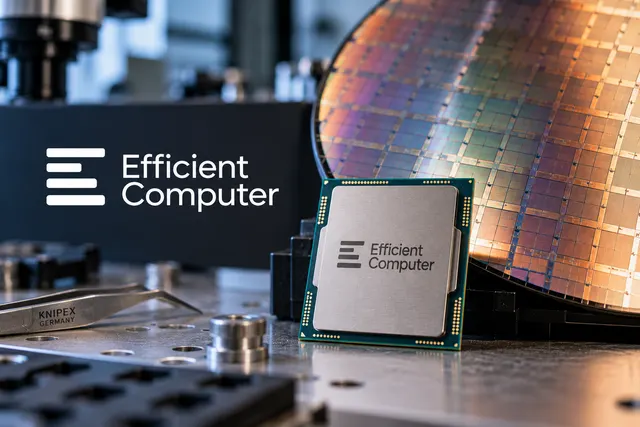
Image: AI-generated editorial illustration
Efficient Computer said on Sept. 29, 2026, that it had entered agreements for more than $97 million in Series B financing at a $650 million valuation, with TQ Ventures leading the round. The chip startup said it will use the capital to ship its Electron E1 processor in volume and scale its Fabric architecture toward datacenter-class performance.
What Series B financing has Efficient Computer agreed to?
Efficient Computer said on Sept. 29, 2026, that it had entered into agreements for more than $97 million in Series B financing at a $650 million valuation. The round was led by TQ Ventures, with participation from Eclipse, Union Square Ventures, Giant Ventures, Triatomic Capital, TO Capital, TF Capital, Mana Ventures, Toyota Ventures, Overmatch, and Borderless, according to the company’s announcement. Efficient said the financing brought total capital raised to $173 million.
The company framed the raise as support for a computing platform that is meant to stretch from edge devices and physical AI systems to datacenter workloads. Efficient said its Fabric architecture is a clean-slate redesign of computing and that it remains fully general-purpose, which it says matters because emerging AI-enabled systems — especially physical AI — need to run a wide range of software rather than a narrow set of specialized workloads. The company also said its approach contrasts with specialized AI-only chips that do not support most software.
How does Efficient’s Fabric architecture work?
Efficient said Fabric supports popular software frameworks in a single flexible architecture, with a frontend that supports C, C++, and many other common abstractions. The company said the architecture can scale from the smallest physical AI systems to the datacenter, and that at the lower end it can replace embedded GPUs in a robot autonomy stack while enabling those systems to operate for 10 times less energy. At the high end, Efficient said Fabric accelerates varied and irregular datacenter workloads that are a poor fit for AI accelerator chips and GPUs.
Efficient also said its architecture provides a 10-100x improvement in energy consumption for general-purpose computation, including AI. Separately, the company said scaling its architecture to datacenter-class performance would deliver more than a 10x improvement in energy consumption compared with systems built today. Those are company claims, not independently reported benchmarks, but they show the rationale Efficient is using to position its chips: lower energy use across both embedded and cloud computing environments.
How is Efficient deploying Electron E1 with customers?
The Series B is also meant to support shipping the Electron E1 processor in volume to lead customers. Efficient said the Electron E1 is already bringing Fabric’s energy efficiency to physical AI systems, and that customers are adopting it for physical AI and autonomy, critical infrastructure observability, space and defense, and wearable devices. The company said it has scaled production of Electron E1 to meet customer interest and plans to keep increasing volume into 2027 to serve its global customer base.
CEO Brandon Lucia wrote separately that he co-founded Efficient about 10 years earlier with Nathan and Graham. In that note, Lucia said the company has already begun work to scale its technology to humanoid autonomy, self-driving, and agentic AI at the edge and in the cloud. That suggests Efficient is trying to move from a shipping edge processor toward broader compute markets, but the company did not say in the announcement that those products are commercially available.
What do Efficient’s investors say about its progress?
TQ Ventures’ Andrew Marks said the firm was convinced by Brandon, Graham, and Nathan’s ability to build both hardware and software. Marks also said Efficient had taped out four times and was already shipping chips to customers at volume. Those comments point to a company that is beyond the prototype stage and into manufacturing and deployment, which is often a difficult transition for chip startups.
Efficient’s latest financing focuses on hardware for compute-intensive workloads. In a separate software and database infrastructure transaction announced on October 2, Supabase announced a $150 million financing and Turso acquisition, contrasting with Efficient’s hardware emphasis.
Cooley said it had previously advised Efficient on its Series A in February 2026. The law firm’s note provides an additional sign that Efficient’s financing process has been active for months, but the company’s latest announcement still describes the Series B as agreed rather than completed.
Sources
- Efficient Computerwww.efficient.computer· Efficient Computer
- Cooleywww.cooley.com· Cooley
- Efficient Computer raises more than $97M Series B led by TQ Ventureswww.efficient.computer· Efficient Computer