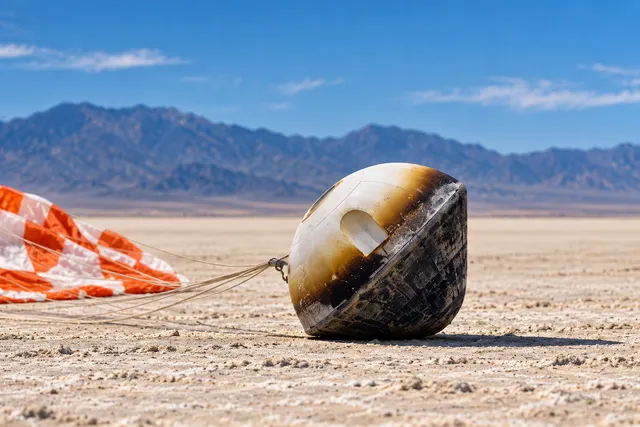
Image: AI-generated editorial illustration
Varda Space Industries has raised a $251 million Series D round led by Lux Capital and Natural Capital, according to company coverage published Sept. 30, 2026. The financing brings total capital raised to $598 million as the orbital manufacturing startup expands its launch cadence, pharma partnerships and reentry program.
How much did Varda raise in its Series D?
Varda Space Industries raised a $251 million Series D round on Sept. 30, 2026, with Lux Capital and Natural Capital leading the financing, according to Cooley’s announcement coverage and reporting from BioSpace, Payload and Pharmaceutical Technology. The company said the new funding brings its total capital raised to $598 million.
BioSpace, citing Reuters, reported that the round valued Varda at $1.6 billion. That valuation has been reported alongside the financing, but the core transaction itself is the $251 million Series D led by Lux Capital and Natural Capital. Cooley’s coverage said the round also included participation from Founders Fund, Khosla Ventures, Caffeinated Capital, General Catalyst, 8090 Industries, Giant Step and Also Capital.
What is Varda building?
Varda is developing infrastructure for manufacturing pharmaceuticals in space and returning the finished material to Earth. BioSpace said the company’s goal is to make medicines in space for patients on Earth, while Pharmaceutical Technology reported that Varda is seeking to debut the first space-made medicine on the pharmaceutical market.
The technical premise is that microgravity can affect crystal formation in ways that may alter drug stability and bioavailability, according to BioSpace. Varda argues that APIs can be crystallized in space in ways that are not possible on Earth, potentially enabling medicines with different patient benefits, Pharmaceutical Technology reported. Those claims are company-facing and should be read as the basis for Varda’s product thesis rather than proven clinical outcomes.
BioSpace said Varda launches capsules into orbit aboard commercial rockets such as SpaceX’s Falcon 9. The capsules carry equipment for processing pharmaceuticals in orbit. After the orbital processing step, the capsule separates from the satellite, returns to Earth and is recovered for analysis. That process is central to Varda’s business model: use space conditions for material processing, then bring the output back for study and, ultimately, possible commercial use.
What is Varda’s operating record and customer demand?
Varda was founded in 2021 by former SpaceX engineer Will Bruey and Founders Fund partner Delian Asparouhov, according to BioSpace. The company launched its first mission in 2023 and, as of the BioSpace report, had completed six successful reentries. Payload likewise reported six re-entry missions since 2023.
The company appears to have booked a sizable launch pipeline. BioSpace, citing Reuters, reported that Varda had booked 28 launches with SpaceX and other providers between 2027 and 2029. Payload said more than a dozen additional re-entry missions were planned over the next two years, while Bipsiq said Varda had more than a dozen additional launches and reentries planned through 2028.
Varda’s customer base extends beyond pharma, according to Payload, which said its capsules are also used by semiconductor manufacturers and national security customers. That suggests the company is positioning its reentry hardware as a broader orbital processing platform, not only a drug-development service.
How does Varda plan to use the new capital?
The company and its backers say the new money is aimed at increasing flight cadence, accelerating returns and deepening pharmaceutical partnerships. Pharmaceutical Technology reported that Varda intends to use the funding to increase the frequency and speed of launches and returns and to deepen pharma partnerships. Co-founder and president Delian Asparouhov said the company was started with the conviction that the first space-manufactured product consumed on Earth would be a pharmaceutical, and said the new round gives Varda resources to increase cadence, deepen pharmaceutical partnerships and move closer to delivering the first medicine made in space.
Varda already has a partner in United Therapeutics. BioSpace reported that in May the two companies partnered to develop improved formulations for rare lung indications, and that United Therapeutics said the collaboration would explore how space-based manufacturing could improve rare pulmonary disease treatments.
The broader operational picture is a company that has moved from proof-of-concept flights to a repeat-launch business. Lux Capital partner Shahin Farshchi called Varda “the first and only company delivering a real cadence of launches and reentries,” according to BioSpace. Payload also reported that Varda’s W-8 and W-9 missions were set to launch aboard SpaceX’s Transporter-18 as soon as Thursday, with W-8 carrying sensors to study capsule temperature and other re-entry data and W-9 including a DoD payload to test navigation during hypersonic flight. Payload said W-9 would also test advanced heat shield tiles from Syensqo.
For Varda, the Series D marks another step toward proving that orbital manufacturing can support a repeatable commercial business. The company now has more capital, a larger launch pipeline and a stated goal of turning space-based processing into medicines on Earth, but the market will still judge it on whether those flights can translate into dependable production and commercialized output.
Sources
- BioSpacewww.biospace.com· BioSpace
- Payloadpayloadspace.com· Payload
- Yahoo Finance / Pharmaceutical Technologyfinance.yahoo.com· Yahoo Finance / Pharmaceutical Technology
- Bipsiqbipsiq.com· Bipsiq
- Varda Space Industries raises $251M Series D led by Lux Capital and Natural Capitalwww.cooley.com· Cooley