Image: AI-generated editorial illustration
Munich-based electric-aircraft startup VÆRIDION announced on November 5 that it closed a €30 million Series A2 equity round to build the first certification-conforming prototype of its nine-passenger, all-electric Microliner and advance integrated battery and propulsion testing.
Munich-based electric-aircraft startup VÆRIDION said on November 5 that it has closed a €30 million Series A2 equity round to build the first certification-conforming prototype of its nine-passenger, all-electric Microliner and carry out integrated battery and propulsion testing.
The round was led by SHIFT Invest and Invest-NL. Other named participants included World Fund, Project A, Vsquared Ventures and PAYBACK founder and deep-tech investor Alexander Rittweger, among others, according to the company and reporting from Startbase, Tech.eu and Aviation Week.
VÆRIDION said the Series A2 and a separate €94.5 million EU Innovation Fund grant selection together take its equity and grant funding above €124 million. The company also said it has raised about €60 million to date excluding the EU grant, including this round and earlier public funding.
What is VÆRIDION building?
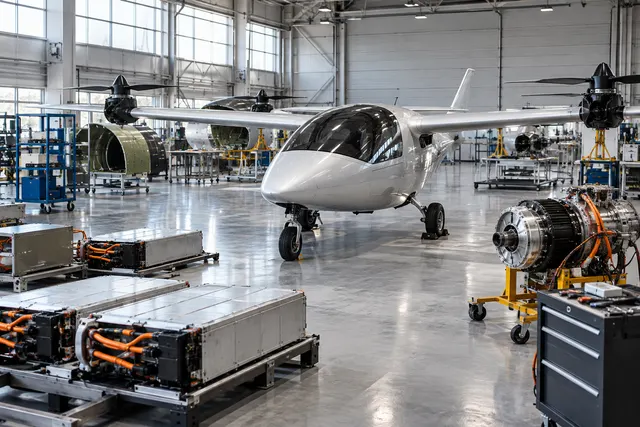
VÆRIDION is developing the Microliner, a clean-sheet electric aircraft aimed at regional aviation. The company describes it as a nine-passenger aircraft with a glider-inspired wing, patented integrated modular batteries and a multi-engine, single-propeller propulsion system.
According to VÆRIDION, the Microliner targets 400 kilometers of range with nine passengers under IFR conditions, or up to 550 kilometers with four passengers under VFR. The company also said it plans passenger and cargo versions, with the cargo configuration capable of carrying up to 10 cubic meters.
The startup says the aircraft is intended for scheduled, semi-scheduled and charter passenger and cargo operations. It also claims the design targets operating costs below €0.40 per seat-kilometer, and that low noise could enable night flights if airports approve them.
Why does the company say demand is there?
VÆRIDION argues that regional aviation is exposed to fuel-price shocks and fleet aging. The company said jet fuel prices had more than doubled year-on-year by October 2026 and that the EU imports 57% of its energy.
It also said more than 21,000 small turboprop aircraft serve regional routes worldwide, with an average age of 23 years, and that no new aircraft of that size have entered service in 30 years. VÆRIDION further attributed to the ERAA that about 120 regional routes in Europe were discontinued in the five years before June 2026 because of fuel and maintenance costs.
The company cited McKinsey’s estimate that the global market for regional air mobility could reach as much as $115 billion by 2035.
What happens next with the funding and grant?
VÆRIDION said the equity proceeds will support two immediate steps: construction of the first conforming Microliner and integrated battery and propulsion testing. CEO Ivor van Dartel said the company has moved the aircraft from validated design into hardware over the past year and is now testing propulsion and battery technology at Oberpfaffenhofen.
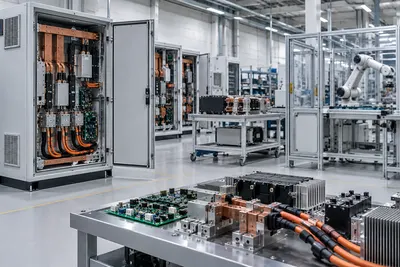
The company said its next development step is integrating battery packs and the propulsion system on a ground-test rig called the copper bird, alongside wind-tunnel testing. It also said it opened its production and test facility at Oberpfaffenhofen Airport in March 2026 and recently powered on its electric engine for the first time.
Separately, the European Commission selected VÆRIDION’s CAROLUS project for a €94.5 million Innovation Fund grant to support industrialisation at Oberpfaffenhofen Airport near Munich. VÆRIDION said the grant selection supports the establishment and ramp-up of a final assembly facility there, but the award still depends on finalizing a grant agreement the company expects to sign in 2027.
The company said CAROLUS was selected from 358 applications as one of 12 large-scale projects, and that it was the only aviation project selected in that category.
VÆRIDION said commercial commitments have already been secured for 130 aircraft valued at more than €730 million, naming ASL Group as launch customer. It also said its Market Advisory Committee includes KLM, BayernLB and TrueNoord.
The startup is headquartered in Munich and has subsidiaries in Delft and Brussels. It said it will continue expanding its team across Europe as it works toward industrialization and certification, including ongoing EASA-related work. VÆRIDION said the Microliner has completed its Preliminary Design Review and a second Pre-Application Contract with EASA in the past 12 months, and earlier said it completed a second EASA Pre-Application Contract with GKN Aerospace establishing one of the first certification approaches for High-Voltage EWIS in the CS-23 Level 3 category.
Sources
- Europe Deal Trackerstartup.eu· Startup Europe
- Company News Archivesvaeridion.com· VÆRIDION
- German aerospace startup VÆRIDION raises €30M for zero-emission regional flightstech.eu· Tech.eu
- Startup News for the Weekend, Week 45/26startbase.com· Startbase
- Vaeridion Secures €30M Equity Round, Selected For €94.5M EU Grantaviationweek.com· Aviation Week