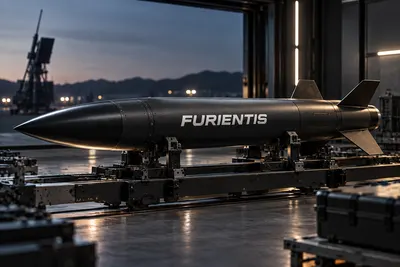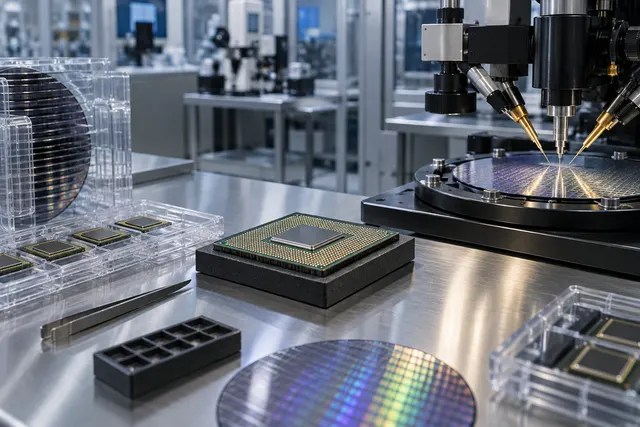
Image: AI-generated editorial illustration
Tendrils Compute, the Cambridge, UK chip startup building a parallel-first processor and programming language called Vine, closed a $30 million seed round on Tuesday led by Benchmark, according to reported coverage. The round included the UK Sovereign AI Fund and other named investors, while the company did not disclose a valuation.
Tendrils Compute closed a $30 million seed round led by Benchmark on Tuesday as the Cambridge, UK startup continues work on a parallel-first general-purpose processor and its companion language, Vine.
What did Tendrils say it raised?
Tendrils Compute reportedly closed a $30 million financing led by Benchmark, with the company not disclosing a valuation. The Cap Table said the round was announced on a Tuesday and described it as a seed financing, while other coverage referred to it as a reported seed round.
The Cap Table also said the financing included the UK Sovereign AI Fund and a group of named co-investors: Visionaries Club, FR8, Antimatter, Cloudberry VC, Conviction, Embassy Ventures and SV Angels, along with angel investors. The report did not disclose the size of individual checks or the full terms of the round.
What is Tendrils building?
Tendrils is developing a general-purpose processor that abandons the sequential, single-core lineage of conventional CPUs. According to The Cap Table and EUVC, the chip is designed around thousands of cores that work in parallel, using interaction nets, a graph-based computation model in which independent operations can run at the same time without changing the result.
The startup is also building Vine, an open-source programming language meant to compile programs into that interaction-net model. The goal, according to the reporting, is to let software spread work across many cores without requiring developers to manually assign threads.
Tech.eu said Tendrils describes its architecture as thousands of parallel cores and that it is developing Vine for a new wave of parallel-first architectures. EUVC likewise described Tendrils as a Cambridge semiconductor startup building a parallel-first general-purpose processor.
Why do investors think the timing matters?
Backers are betting that AI-agent workloads may create a narrow but commercially meaningful opening for a different kind of compute architecture. EUVC reported that Cloudberry VC argued these workloads fit neither CPUs optimized for fast serial execution nor GPUs built for many identical operations.
The Cap Table said Tendrils’ backers see the first commercial opening in branching AI-agent tasks such as running code, testing, compiling and searching documents between model calls. The same report said Tendrils could potentially sell compute through an API rather than shipping chips for customers to install themselves, which could lower adoption barriers if the hardware proves useful on a focused set of workloads.
Cremer’s stated entry point is smaller, self-contained applications with irregular parallelism, including optimization, sparse graph processing and simulation. EUVC and The Cap Table both framed the company’s thesis around these types of workloads rather than broad replacement of existing CPUs.
Who is behind Tendrils, and what comes next?
The Cap Table identified founder Nils Cremer as having worked on interaction nets at ETH Zürich. It said co-founder T6 built Vine and its toolchain, while co-founder Hugo McNally previously worked at lowRISC on open-source chip designs. The team also lists Enrico Borba.
Benchmark partner Jack Altman reportedly joined Tendrils’ board as part of the financing. The Cap Table also noted that Visionaries Club had previously supported Cremer with a grant and led Tendrils’ pre-seed round in summer 2025 alongside FR8 and angels.
For now, the company has not disclosed a fabrication partner, tape-out timetable, pricing or measured benchmark results, and no rapid follow-on round has been confirmed. That leaves the new capital as a funding milestone rather than a product or manufacturing launch, with the key next questions centered on whether Tendrils can demonstrate a performance advantage on the workloads it is targeting.
Sources
- London-based Tendrils Compute raises $30 million seed round led by Benchmark to rethink...x.com· Startup.eu
- Plurai Raises $13M Seed for AI Agent Simulationdevcuration.com· DevCuration
- How the Nvidia Leadership Crisis Could Affect Startups, Investors and the AI Ecosystemangellinx.ai· Angellinx
- Tendrils raises $30m seed led by Benchmark as the Sovereign AI Fund joins the Cambridge chip start-up's cap tablethecaptable.co.uk· The Cap Table
- Tendrils Compute raises $30m Seed to rethink the CPUeu.vc· EUVC
- Tendrils Compute raises $30m to “redo the CPU”tech.eu· Tech.eu