Image: AI-generated editorial illustration
RobCo said it passed a $1 billion valuation on October 5, 2026, with The Wall Street Journal and Quartz reporting that the milestone came in a roughly $40 million secondary share sale, mostly by employees. The Munich robotics startup had been valued at about $500 million in January after a $100 million Series C, and the new transaction brought in both liquidity for staff and participation from existing and new backers.
How did RobCo cross the $1 billion mark?
RobCo said it passed a $1 billion valuation on October 5, 2026, in a secondary share sale, while The Wall Street Journal and Quartz reported that the deal involved about $40 million of stock. Quartz said most of the shares were sold by employees rather than by the company, making this a liquidity event more than a primary capital raise.
The transaction lifted RobCo from about $500 million earlier in 2026, when it closed a $100 million financing round in January. That means the company’s valuation roughly doubled in less than a year, even though the secondary sale itself was not mainly about new cash going onto RobCo’s balance sheet.
Who bought into the secondary sale?
RobCo’s secondary included a mix of existing backers and new investors. Quartz said existing investors including Sequoia, Lightspeed and Lingotto participated, while new investors included Cherry Ventures and European Tech Collective. Tech Funding News reported additional participation from Greenfield, Kindred, Lingotto and Promus Ventures, and said RobCo described the deal as bringing new investment into the business while also letting long-standing employees sell shares.
RobCo CEO Roman Hölzl said the secondary gave some employees a chance to realize value they helped create. Reuters, via Devdiscourse, reported that RobCo said employees sold shares to existing and new investors including Cherry Ventures and the European Tech Collective.
What does RobCo build?
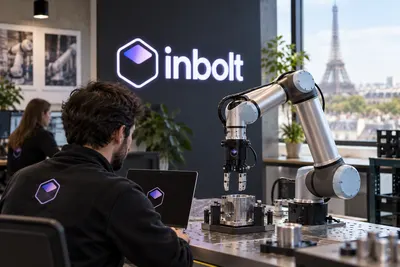
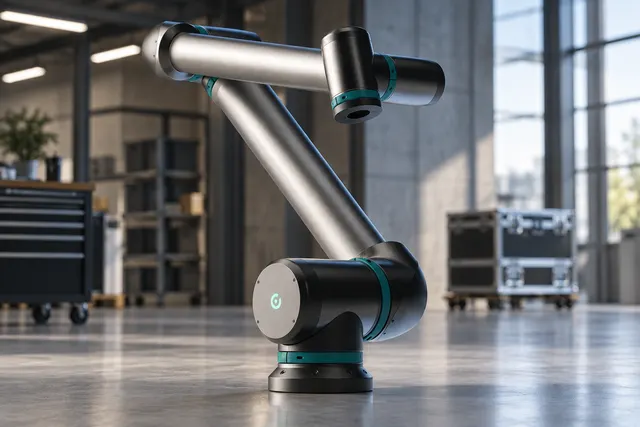
RobCo makes autonomous robots for factory floors and says its software and hardware are built as a single full-stack platform. In its January financing announcement, the company said its platform combines perception, motion planning and self-learning methods to automate production environments, and that its robots learn task-specific skills through demonstration and self-learning rather than manual programming.
The company also said it has been vertically integrated from day one, building hardware and software together. Those are company claims about how the system is designed; the customer-facing takeaway is that RobCo is pitching robots that can adapt to changing industrial tasks without requiring manual coding for every job.
Quartz reported that RobCo’s customers include BMW, while RobCo said in January that its robots are deployed at BMW, DynaEnergetics, Fabricated Extrusion Company, T-Systems and Rosenberger. RobCo also said its Robotics-as-a-Service model helps customers automate manual tasks while minimizing operational complexity and risk, with workflows including machine tending, palletizing, dispensing and welding.
What happens next for Alfie and the U.S. push?
RobCo’s next major product is Autonomous Alfie, a two-armed robot the company says can handle unstructured factory tasks, identify errors and course-correct on the fly. Reuters, via Devdiscourse, said RobCo plans to launch Alfie in March as a self-learning industrial robot for tasks traditional automation struggles with. Quartz said the company plans to commercially launch Alfie at its first annual summit in Munich on March 4, 2027, while AGTP said first customer deployments were planned later in 2026.
Tech Funding News said RobCo is preparing to launch Alfie commercially in 2027 and is doubling down on the U.S. manufacturing market. RobCo said it expanded into the United States in 2025 and that the U.S. became a strategic priority and major growth market because manufacturers are accelerating automation in response to labor constraints, reshoring and operational complexity.
Reuters, via Devdiscourse, reported that RobCo said its CEO Roman Hölzl relocated to the United States to focus on the company’s fastest-growing market. The company also said it now has customers in more than a dozen U.S. states, with manufacturing and assembly in Austin and a lab in San Francisco. For now, the clearest signal from the latest transaction is that RobCo used a secondary sale to give employees liquidity while continuing to expand its U.S. footprint and prepare Alfie’s commercial rollout.
Sources
- Europe's new robotics unicorn: Germany's RobCo hits $1B ...techfundingnews.com· Tech Funding News
- Robotics Startup RobCo Hits $1 Billion Valuationwsj.com· The Wall Street JournalUnverified URL
- RobCo hits $1 billion valuation in employee secondary share saleqz.com· Quartz
- German robotics startup RobCo just hit a $1 billion valuation today. Here's what you need to know.x.com· AGTP
- RobCo raises $100 million to scale its autonomous industrial robotics platformrob.co· RobCo
- RobCo Raises New Investment at $1B Valuation With Employee Share Saleunite.ai· Unite.AI
- German robot startup RobCo hits $1 billion valuation, CEO moves to USdevdiscourse.com· Devdiscourse