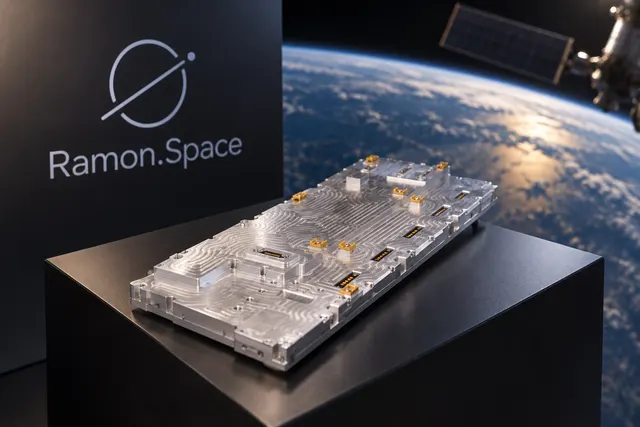
Image: AI-generated editorial illustration
Ramon.Space announced a $124 million Series B on November 17, 2026, lifting its total disclosed funding to $180 million. The space-computing startup said the new capital will help expand manufacturing, speed deliveries and push into new markets as demand rises for in-orbit processing systems.
What did Ramon.Space announce in its Series B?
Ramon.Space announced a $124 million Series B on November 17, 2026, bringing its total disclosed funding to $180 million. The startup, which builds computing systems for satellites and other spacecraft, said the round will support production scale-up, faster customer deliveries and expansion into additional international markets.
Payload Space reported that PSG led the financing. New investors included Micron Technology, Senvest and Phoenix Financial, while existing backers StageOne, Deep Insight and Grove Ventures also participated, according to Satellite Today.
What does Ramon.Space actually build?
Ramon.Space makes satellite computers and related systems that process data in orbit rather than sending everything back to Earth first. Independent coverage describes the company’s products as designed to reduce reliance on ground-based systems by letting satellites process, store and transmit information while they are in space.
Payload Space said the company’s systems aim to deliver ground-computer-class performance while tolerating radiation, temperature extremes and limited power budgets. Ynetnews described the hardware as processors and computing systems built for the conditions of space, with capabilities comparable to terrestrial computing infrastructure.
The company says this approach is meant for spacecraft missions including communications, Earth observation and national security, and it has also pointed to possible orbital data-center architectures. Payload Space reported that Ramon.Space says its technology has been flying for about a decade on a few hundred satellites, and that its existing customers include satellite-constellation operators in satcom and Earth observation.
How will the company use the new capital?
Ramon.Space said the money will be used to ramp production, speed deliveries to customers in its pipeline and enter new markets. Ynetnews reported that the company also plans to increase production capacity, accelerate delivery of computing systems and expand into additional international markets.
Satellite Today said the proceeds are intended to help scale manufacturing toward enterprise production volumes capable of delivering millions of computing nodes. Ramon.Space itself said manufacturing scale is expected to grow from thousands of computing units annually to tens of thousands and beyond, while Ynet reported that management sees a path to millions of computing nodes, though no timetable was disclosed.
CEO Avi Shabtai told Payload Space that customer demand is increasing quickly. Globes reported that the company had 130 employees at the time of the financing and that Shabtai said Ramon.Space was set to double its workforce.
Where does Ramon.Space go from here?
The financing comes as Ramon.Space expands both its product footprint and its manufacturing relationships. Satellite Today reported that the company announced a deal last year to provide digital communication channelizer systems for additional OneWeb satellites. It also said Ramon.Space has had a manufacturing agreement with Foxconn subsidiary Ingrasys since 2023, when Ingrasys also invested in the company.
Earlier in 2026, Ramon.Space and Ingrasys expanded that agreement to develop space data-center infrastructure, and Payload Space reported that an orbital data center prototype is slated to fly in 2027 under the collaboration. That timeline suggests the company is trying to move from specialized satellite computing into broader orbital infrastructure, even as it continues to serve existing mission types.
Ramon.Space was founded in 2004 and shifted its business focus in 2020 to space computing infrastructure, according to Globes. The company said it has offices in Israel, the United States, Britain and Germany, and Globes reported it is setting up an additional center in Germany.
One investor framed the market opportunity in similar terms. PSG managing director Ronen Nir told Ynetnews that orbit-based data processing and management is becoming essential for the space economy and described Ramon.Space’s technology as proven in orbit.
Sources
- From Earth to orbit: Ramon.Space secures $124 million for space computingynetnews.com· Ynetnews
- Ramon.Space Raises $124M to Power Space Computing Growthsatellitetoday.com· Satellite Today
- Israeli space computing co Ramon Space raises $124men.globes.co.il· Globes English
- Ramon.Space Raises $124M in Series B Fundingpayloadspace.com· Payload Space