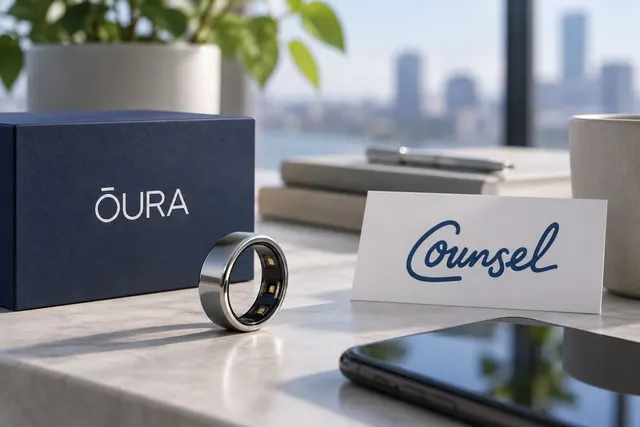
Image: AI-generated editorial illustration
Oura said on Nov. 10, 2026, that it has entered a definitive agreement to acquire Counsel Health, the AI-native primary-care company, for $625 million in cash. The deal, which is subject to customary closing conditions and purchase-price adjustments, is expected to close before the end of calendar year 2026.
Oura agreed to acquire Counsel Health in a definitive agreement announced on Nov. 10, 2026, marking a $625 million cash deal that would bring an AI-native primary-care platform deeper into the smart-ring maker’s app experience. The transaction is expected to close before the end of 2026, subject to customary closing conditions.
Counsel Health’s service is already integrated into the Oura app through a partnership that began in May 2026 and expanded into the app in June 2026. Under the planned combination, Oura’s biometric data is meant to feed Counsel’s AI-native care platform and licensed-physician access, giving users a path from health signals to answers and care without leaving the app.
What is Oura buying?
Oura is buying Counsel Health, an AI-native primary-care company that combines a chat-based medical experience with access to licensed physicians. According to TechCrunch, users can receive AI-generated responses and then continue into a physician conversation when needed.
Oura said the integrated workflow starts with the Oura Ring measuring body signals, the app translating them into insights, and Counsel turning that context into care. Oura also said Counsel physicians can diagnose, treat, order labs and prescribe when appropriate.
The companies have described the product as a way to move users from health signals to care inside a single interface. Reuters reported that the combined product is intended to connect Oura’s biometric data with Counsel’s AI-native care platform and licensed-physician access.
Why does this matter for Oura’s product strategy?
The deal extends Oura beyond wearable analytics into clinical care delivery, at least within the app experience the companies have been building together. Oura said members could explore Counsel in Oura Labs while the acquisition process proceeds, and it said more than half of Counsel users in Oura Labs had shared their Oura data with physicians since the partnership began.
That integration appears to be central to the company’s pitch. Counsel said Oura members can start from an Oura insight or chat directly with Counsel’s medical AI, and the conversation can escalate to a board-certified physician within minutes inside the Oura app. Counsel also said its model uses connected medical records, prior interactions, evidence-based clinical guidelines and continuous biometric data to personalize guidance.
Oura has also leaned on company-reported engagement figures to justify the move. Counsel’s announcement said more than 90% of surveyed members using Counsel reported that their Oura data helped them get better care, and Oura said members who saw a Counsel physician rated the experience 4.6 out of 5. Those figures are company-reported results.
How does Counsel Health say its AI care model works?
Counsel describes its system as a clinical AI harness that calls specialized agents for history-taking, guideline retrieval, records review and emergency detection. The company said those agents are extensively evaluated and improved using physician feedback.
On the clinician side, Counsel said its physicians use a proprietary Clinician Cockpit that synthesizes medical records and longitudinal health trends to generate context-aware clinical suggestions. Counsel said the goal is to resolve most member needs within minutes, and that the product is intended to replace nurse triage lines and telehealth while reducing downstream utilization and costs.
Counsel also framed the business as serving health plans, health systems, digital health solutions, employers and consumers. After the acquisition, Counsel said it plans to keep serving enterprise partners and aims to bring its care model to millions of patients beyond Oura’s member base.
Oura said Counsel will continue serving existing and new enterprise partners after the deal closes, including health plans, health systems, consumer health organizations and employers. The companies also said they plan to build on the partnership in preventive care, acute care, and specialty and chronic care.
What happens next for Counsel and Oura?
If the deal closes as planned, Counsel CEO Muthu Alagappan is expected to join Oura as chief clinical AI officer, and Counsel’s 70 employees are expected to join Oura. The companies said the transaction is subject to customary closing conditions and should close before the end of calendar year 2026.
Financially, the acquisition comes as Oura says it has seen rapid growth. Counsel’s announcement said Oura’s quarter ended Sept. 30, 2026 revenue was $533 million, up 153% year over year, and that adjusted EBITDA was $87 million, a 16% margin. Counsel also said Oura generated about $1.75 billion in fiscal 2026 revenue, up 92% year over year. The company said all of those figures were preliminary and unaudited.
The acquisition also follows a period of scale for Oura. Counsel said Oura has more than six million members and that the decision to invest $625 million in cash was linked to that growth and membership base. TechCrunch reported that Oura had postponed a planned IPO a few weeks before the acquisition announcement, citing uncertainty in the IPO market, and that the company reached an $11 billion valuation after a $900 million late-stage funding round in October 2025.
Counsel itself had previously disclosed $36 million in funding, according to STAT. TechCrunch also reported that Counsel raised a $25 million Series A a year earlier led by Andreessen Horowitz and GV. The acquisition now gives Oura a direct path into AI-assisted primary care as it tries to turn wearable data into a more complete health workflow.
Sources
- Oura to Acquire Counsel Health for $625 Millionhealthcare.levinassociates.com· LevinPro Healthcare M&A
- Oura to acquire Counsel Health, advancing vision for more connected, personalized healthcarecounselhealth.com· Counsel Health
- Oura Announces Agreement to Acquire Counsel Health, the AI-Native, Physician-Supervised Care Platformouraring.com· Oura
- Oura is acquiring medical AI chatbot startup Counsel Healththeverge.com· The Verge
- Oura to acquire Counsel Health for $625 million, placing a big bet on AI carestatnews.com· STAT
- Smart ring maker Oura to acquire Counsel Health for $625 millionfidelity.com· Reuters
- Oura to acquire AI-native primary care startup Counsel Health for $625Mtechcrunch.com· TechCrunch