Image: AI-generated editorial illustration
Fast Metals, a Stamford, Connecticut startup developing technology to recover materials from mining waste, reportedly raised $4.3 million in pre-seed funding, according to Axios and the company’s website announcement on July 29, 2026.
What did Fast Metals announce?
Fast Metals said it raised $4.3 million and is commercializing technology to recover critical minerals from mining waste. The Stamford, Connecticut startup’s financing was reported by Axios as a pre-seed round led by New Climate Ventures, with Azolla Ventures, Humba Ventures, Astor Swiss and Rio Tinto also participating.
The company separately said on its website on July 29, 2026 that it had raised the capital and was working on critical mineral recovery. The fundraising adds early backing for a process aimed at extracting value from red mud, a waste stream produced by alumina refining.
What problem is Fast Metals targeting?
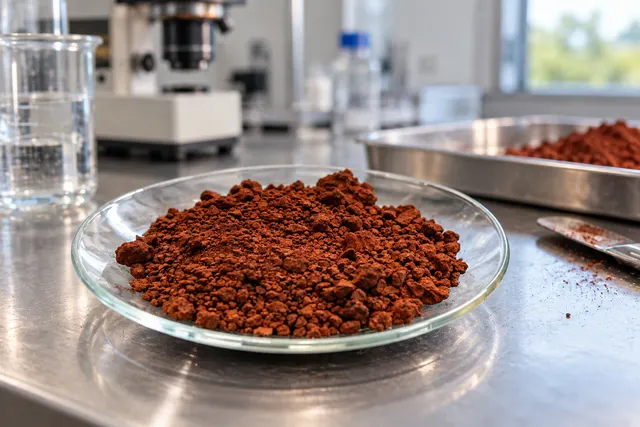
Fast Metals says red mud is a toxic and costly byproduct produced by every alumina refinery. The company says there are already 4 billion tons of red mud stockpiled globally, with another 150 million to 200 million tons added each year.
Rather than sending that material elsewhere, Fast Metals says it acquires mineral-rich waste streams, including red mud and tailings, and takes on the processing burden for waste owners. The company says its model is designed to reduce closure risk, free capacity and pay waste owners for material they currently pay to manage.
How does the process work?
Fast Metals says its core technical approach is to remove iron first from red mud so that recovery of the remaining materials becomes economical. The company says that approach lets it recover iron, alumina, titania and rare earths from a single feedstock in a single pass at sellable grade.
It also says its deployment model relies on mobile modular skids installed at customer sites. That setup is meant to avoid shipping waste elsewhere and instead process material where it is generated.
Fast Metals says the process eliminates 100% of the waste and increases asset life. It also says the system abates 1.43 tons of CO2 for every ton of red mud processed, a claim the company ties to its waste-recovery approach.
Who is behind the company?
Fast Metals says the company is built on CEO and co-founder Sumedh Gostu’s Ph.D. research at Worcester Polytechnic Institute, where he developed a low-temperature process to extract iron, aluminum, titanium and rare earth elements from bauxite residue. The company says Gostu previously served as Technical Risk Manager and Hydrometallurgy Expert at Glencore.
The company also says Gostu oversaw a $500 million lithium battery recycling hub in Europe and led technical due diligence on major M&A transactions at Glencore. Other named operators and advisors include Anthony Staley, whom Fast Metals says led the restructuring and operational recovery of five mining operations, two mineral processing facilities and the last remaining primary zinc smelter in the United States at Nyrstar, and later helped lead a nearly $900 million lithium battery recycling facility at Li-Cycle.
Fast Metals says its advisors include Nick Popovic, a former co-head of copper, zinc, lead and cobalt trading at Glencore and chair of Kazzinc, Terry McNulty, the inventor of the McNulty Ramp-Up Curve used for scaling chemical and metallurgical operations, and Peter Stahley, who previously served on the U.S. Senate Committee on Energy & Natural Resources under Senator Joe Manchin.
What happens next?
Fast Metals says the capital supports commercialization of its critical mineral recovery technology. If its process scales as described, the company is positioning red mud and similar waste streams as an input for domestic mineral supply without opening new mines.
For now, the reported funding round gives the startup a named investor group and fresh capital as it tries to turn a difficult industrial waste into saleable materials.
Sources
- Energy and climate deals of the weeknext-13-sage.vercel.app· Axios
- FAST Metalsfastmetalsinc.com· FAST Metals