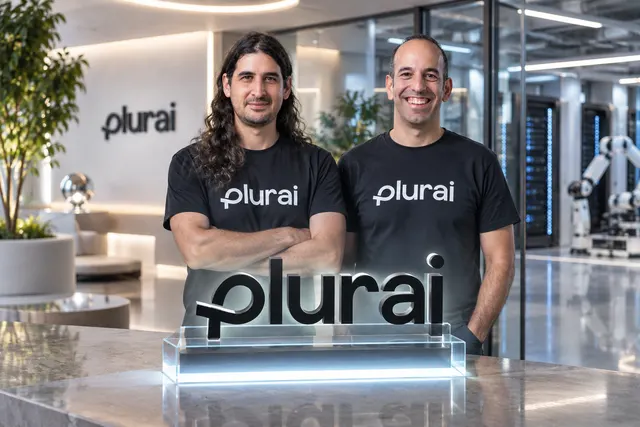
Image: AI-generated editorial illustration
Plurai announced a $13 million seed round led by Team8 on November 9, 2026, alongside general availability for its AI-agent testing platform. The company says the system simulates an agent’s operating environment, runs adversarial interactions, and flags failures before and after deployment.
What did Plurai announce on November 9?
Plurai announced a $13 million seed round led by Team8 and said it was opening its AI-agent testing platform to developers with a free tier. Team8 said the company made the announcement on November 9, 2026, while other reports covered it on November 11.
The funding adds capital to a startup building infrastructure for testing and monitoring AI agents. Plurai is pitching the product as a way to evaluate agents before they are deployed and keep checking them after they go live, rather than relying on limited sampling.
How does Plurai's platform work?
Plurai says its platform creates a simulated version of an agent’s operating environment using a customer’s knowledge base, tools and policies, then runs simulated and adversarial interactions to surface failures. Reported failure modes include policy breaches, hallucinations, incorrect actions, broken tool calls, failed tasks and data leaks.
Team8 described the product as creating a digital twin of an AI agent and its environment, then sending thousands of realistic and adversarial users into a sandbox. The investor said the system can monitor every interaction, with small language models acting as always-on reviewers that check actions and enforce company policy.
Plurai also said the simulation process is used after testing to improve the agent, generate fixes for failures and create task-tailored small language models. Those models can either run the agent itself or act as evaluators and guardrails during live use.
Who is backing and using Plurai?
Team8 led the round, and its investment note said the financing also included U&I, Velocity and Mercer, along with more than 20 angel investors and industry leaders. IT Brief reported participation from angel backers and industry figures including CyberArk founder Udi Mokady, while Microsoft 365 Copilot CTO Dr Eyal Carmi joined Plurai’s advisory board.
Team8 said Plurai already works with Fortune 500 companies and major financial firms, and Ynet reported the startup is serving companies in AI-heavy and regulated industries, including large financial institutions and Fortune 500 enterprises. Team8 also said Plurai recently partnered with Eon to establish benchmarks for AI agents and that Gartner named Plurai a Representative Vendor in its 2026 Market Guide for AI Evaluation and Observability Platform.
Why does Plurai say the market needs this?
Plurai is targeting a common enterprise problem: AI systems can look ready in internal tests and still fail in production. The company cited VentureBeat Pulse Research saying half of enterprises had deployed an AI agent or LLM feature that passed internal evaluation but still caused a customer-facing failure.
The startup said design partners cut agent development cycles from months to hours, reduced failures reaching users by 82% and lowered running costs by 97%. TechCrunch reported that Plurai maps possible agent flows and uses that graph to prepare evaluations and fixes for edge cases. IT Brief also reported that Plurai’s technology draws on its BARRED method for generating synthetic training data for custom small language models, and that it cited research on serving hundreds of tailored models in real time on one GPU.
Plurai said its work with NVIDIA and Nebius for a global enterprise customer showed its post-trained models beating frontier models from OpenAI and Anthropic on accuracy at much lower cost, though it did not name the customer. Separately, Team8 said Plurai’s research and open-source projects are used by hundreds of thousands of developers worldwide.
The company’s founders, Ilan Kadar and Elad Levi, were previously at Nexar, according to TechCrunch and IT Brief. TechCrunch said Kadar also worked with Waymo on simulation and evaluation, which fits Plurai’s positioning around simulation-heavy testing for AI agents.
What happens next for Plurai?
Plurai says the new capital will support simulation engineering, product development and commercial expansion, according to InfotechLead. Ynet similarly reported that the proceeds would be used to expand the platform.
The company is now broadly available to developers, with support for tools including Claude Code, Codex, GitHub Copilot and Cursor, as well as enterprise platforms such as Salesforce Agentforce. That puts Plurai in the emerging category of agent evaluation and observability tools built to catch issues before they reach users and keep watch after deployment.
TechCrunch reported that Plurai maps possible agent flows and uses that graph to prepare evaluations and fixes for edge cases. The company’s broader pitch is that AI agents need the same kind of simulation discipline that helped self-driving cars earn trust on roads, with CEO Ilan Kadar comparing the effort to Waymo’s use of more than 20 billion simulated miles.
Sources
- VC funding deals: Luminal, Griffin, Pluraiinfotechlead.com· InfotechLead
- Plurai raises $13M to catch AI agent failures before they reach customersynetnews.com· Ynet News
- Plurai raises USD $13 million for AI agent testing platformitbrief.news· IT Brief
- Why We Invested in Pluraiteam8.vc· Team8
- Plurai wants to help AI agents work better using the same approach that helped get self-driving cars to roadstechcrunch.com· TechCrunch