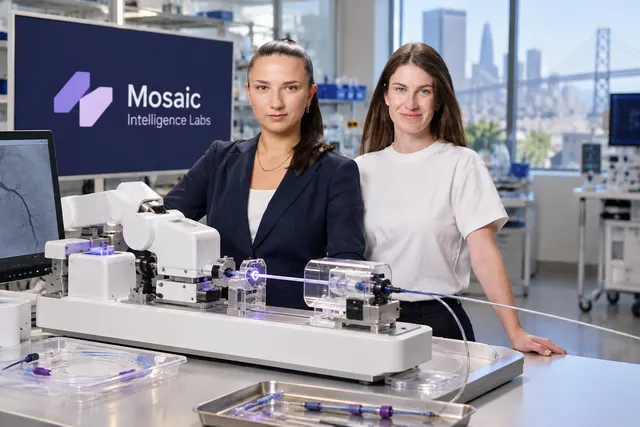
Image: AI-generated editorial illustration
Mosaic Intelligence Labs emerged from stealth with a $47 million seed round to develop AI-powered robotic systems for minimally invasive vascular procedures. The San Francisco startup says its platform is designed to help physicians navigate blood vessels with greater precision, starting with endovascular interventions that use wires and catheters.
Mosaic Intelligence Labs emerged from stealth with a $47 million seed round reported on Nov. 11, 2026, while FireRound’s verified funding feed lists the round at $47 million on Nov. 10 and names 8VC and Fundomo among the investors. Tech Funding News also reported that the round included backing from Lingotto Innovation and Obvious Ventures.
The San Francisco startup says it is developing AI-powered instruments for minimally invasive vascular procedures that can sense the vascular environment, reconstruct anatomy in real time and help physicians navigate blood vessels with greater precision. FireRound describes Mosaic as building embodied intelligence and robotics for surgical applications to enhance physicians’ ability to navigate the body.
Mosaic was founded by Dr. Ileana Pirozzi and Dr. Alison "Ali" Kight Mackanic, who met during doctoral studies at Stanford, according to Tech Funding News. The company says its team includes builders behind surgical systems used to treat more than 20 million patients, and it is starting with endovascular intervention procedures that move wires and catheters through blood vessels.
What is Mosaic building?
Mosaic is building intelligent surgical machines that combine sensing, computational systems and robotic control for minimally invasive vascular procedures. Tech Funding News reported that the company’s platform is intended to provide a continuously updated 3D view of anatomy and instrument position, so surgeons can better understand where devices are inside the body as they move.
That technical approach matters because endovascular procedures depend on accurate navigation through narrow, shifting blood vessels. Mosaic’s stated goal is to connect what the system senses with what happens when it moves, then use repeated procedures to improve performance over time. CTO Alison Mackanic said existing systems lack an evolving loop between perception and action, according to Tech Funding News.
The company’s immediate aim is to support physicians. Over the longer term, Mosaic says it wants surgical experience itself to become a source of cumulative learning for its machines.
Who backed the round?
FireRound lists 8VC and Fundomo alongside Mosaic’s $47 million seed round, while Tech Funding News says the backers included 8VC, Fundomo, Lingotto Innovation and Obvious Ventures. Tech Funding News also reported that Lingotto Innovation manages about $1.8 billion.
The funding amount appears in multiple reports as $47 million, and FireRound’s feed dates the seed round to Nov. 10, 2026. Il Quotidiano del Lazio reported that Mosaic said it obtained the money through two initial financing rounds.
According to Il Quotidiano del Lazio, the company said the financing will support continued research, robotic-system development and hiring, along with work toward future clinical application. The report also said the devices are not yet available in hospitals or through completed regulatory authorization.
What happens next for Mosaic?
Mosaic says the next stage is to expand the team and continue building the hardware, sensing and machine-learning stack needed for surgical robotics. FinSMEs reported hiring plans across hardware engineering, sensing, perception, machine learning and clinical engineering, while Il Quotidiano del Lazio said the company will continue research, robotic-system development and technical hiring as it works toward future clinical application.
The first application area is endovascular surgery, which aligns with the company’s current focus on wires, catheters and blood-vessel navigation. Tech Funding News reported that Mosaic ultimately envisions catheters carrying drugs, energy and biologics directly to a target site, suggesting the platform could extend beyond navigation into targeted delivery if development progresses.
For now, Mosaic is newly out of stealth, newly funded and still building toward broader adoption. Its bet is that a machine that can sense, model and learn from procedures will be more useful over time than systems that only execute a fixed motion plan.
Sources
- Mosaic Intelligence Labs emerged from stealth with $47 million in seed funding to build AI-powered robotic systems that help physicians navigate bloodx.com· @AiInsiderCo on X
- Funding feedfireround.dev· FireRound
- Parte da Colleferro a 15 anni, arriva alla NASA e rivoluziona la chirurgia: chi è Ileana Pirozziilquotidianodellazio.it· Il Quotidiano del Lazio
- Mosaic Intelligence Labs Raises $47M in Seed Fundingfinsmes.com· FinSMEsUnverified URL
- Stanford founders' Mosaic exits stealth with $47M to build surgical robots that navigate blood vesselstechfundingnews.com· Tech Funding News